 |
Village History |
 |
| by Irma Dolphin |
|
|
Village History |
|
| by Irma Dolphin |
| The stories below are from "Hyde Heath - our Village" by
Irma Dolphin - published 1989, referring to events between the years 1927 -
1945 and reproduced here with her kind permission. click on titles below.
That Sunday morning, the peace in the winding
village lane was shattered by a loud clanging and banging, like an invasion
alarm. Children rushed to their windows to see what it was all about. The more
daring ones opened doors and clambered on gates, only to be dragged back by
their mothers. Outside every house, and both sides of the lane as far as could be seen in
both directions, stood women, banging away with sticks and wooden spoons on
dustbin lids, saucepans, frying pans and tin trays - whatever came to hand. And running the gauntlet of these jeering viragos were a man and a woman with
a small child between them, the man clutching a bag of meagre belongings. Yet
the two adults marched straight ahead with heads held high. "What's it all
about? What have they done?" the children asked their mothers. "They've been very wicked. That's all you're going to be told.
And come away from that window!" What evil had they done,
what sin had they committed ? (“evil” and "sin") were great
Sunday words in those days). The child had done nothing. The man and the woman had fallen in love - but
they were each married to someone else. So, disgusted and alarmed, the
other women had decided to drum them out of the village.
This was a far different
Hyde Heath from the one we know today. And I've seen all the changes myself.
It didn't even exist on some road maps. Locals called it the last place on
God's earth. Today the estate agents call it a delightful, much-sought-after
Chiltern village. In those days it really
was rural, no more than a few houses and bungalows, two shops, a bakery, the
Post Office Stores, a heath (of course!), school, chapel, church and five
farms. It also had its village hall, whose correct title is Memorial Hall, as
it was erected in memory of the fallen of World War I. Most of the houses and
bungalows were clustered close to the Post Office, in Brays Lane and Weedon
Hill. Hyde End, a mile away, hardly counted. The last house on the Hyde End
side was Mantles Green Cottage just past Bullbaiters Lane, and on the Amersham
side Holmleigh, halfway along Weedon Hill. The Hyde End side has never been
extended, but on the Amersham side houses have been built all the way to
Keepers Lane. Some of these are even now being demolished for a housing
development. Where the Housing
Association estate now stands, there was a large field with a pond. The new
homes in Walnut Way and Westfield took over the site of a cherry orchard, a
beautiful sight at blossom‑time. As if to compensate for this loss, the
new houses have trees, shrubs and gardens. Brays Close did not exist,
and there were no houses in Chalk Lane after Owls Hoot at the top of the dip.
The Cedar Ridge development now occupies the site of the Wick, so‑called
because it was in the centre of the Candlestick ‑ the area bordered by
Brays Lane, Brays Green Lane, Keepers Lane and Weedon Hill ‑a pleasant
Sunday walk‑around. You could stroll down
Brays Lane and see pigs and cows watching you from behind the hawthorn hedges.
At the bottom of the lane stood the Grange, an old house once the home of Alf
Jarvis of the Old Amersham family. The Grange has since been demolished to
make way for new houses. The largest farm was
Nash's on Weedon Hill, still farmed by the Nash family and now the venue of
the bi‑annual September Farm Show. Hawthorn Farm, beyond the common in the direction of Hyde End, was owned by
the Howells family. It is now a private residence belonging to Mr Chris
Collins, the we11 known equestrian. The Howells family also owned Brays Farm
in Keepers Lane, more of a smallholding. Arthur and Frank Atkins ‑
friends in those far‑off days and friends still ‑ spent their
young days at Brays Farm before moving to the Haven in Brays Lane. Home Farm, situated behind
Snowdrop Cottage opposite the heath (now the cricket pitch), was more of a
country home. It was owned by Sir Frank and Lady Morgan. Sir Frank received
his knighthood for services rendered during World War II. He was a director of
the Prudential, and helped to negotiate the lend‑lease Agreement which
helped Britain tremendously. Mantles Farm lay beyond a muddy track near the bottom of Chalk Lane, bordered
by Bullbaiters Lane, and was farmed by Victor Kibbles and his father. Most of the cottages
around the common were occupied by local farm workers. They had no indoor
toilets or mains water. Water had to be fetched from a pump near Eagle Cottage
and carried in buckets hung from a yoke. A day's water meant several such
journeys. Some of the cottages were rent‑free to workers under the
feudal system, which meant eviction if you got the sack. 1 don't remember this
happening in my time. Mantles Green Cottage was
for a time a home for the glis‑glis ‑ the edible dormouse. When
visiting friends there I saw these hamster‑like rodents running up the
walls. I doubt if they are still there.... Cottages around the common
today have been beautifully restored, and the asking price ‑ if you
could find an owner willing to sell ‑ would be between £150,000 and
£200,000!
I first saw Hyde Heath in the late 1920s. Our family were early settlers from London. My first sight of Hyde Heath School was terrifying. I'd already had two months' rather horrible schooling in London, and this didn't look much better. Feeling hesitant and shy, I was ushered into the cloakroom with my sister and allotted a peg for my hat and coat. All the children stared at us as we entered the huge classroom. Word had got around that we were foreigners twice over: our parents were Flemish, and we two girls had been born in London. Hyde Heath then was a very "closed" village, and we were worthy of a good gawp. We were led into a smaller classroom and given small rounded-back chairs, then a slate and a slate pencil. Miss Reynolds the infant teacher must have had a vague hope that these would prompt us to produce something for her to assess, but I just burst into tears and wanted to go home. Somehow I eventually settled into school life. Learning was a hard process. I was made to feel as thick as two planks. But I made friends easily with the other children, and remain friends to this day with those few who are still left in Hyde Heath. At 8.50 am the school bell would be heard in the village, summoning us to hurry and get to school on time. We stampeded up Brays Lane, and even most of the dawdlers managed to make it. Those who didn't were lined up in the cloakroom for a swipe of the cane. This practice was carried on by the headmistress - Miss Fassam then and Mrs Donaldson in the 1930s. Fear of the cane was a great persuader, and learning was pushed and beaten into pupils aged from five to eleven. After rollcall, our morning began with mumbled prayers. The first lesson was nearly always "sums". Sums would be called maths today, I suppose. We would recite our tables up to 12-times until we knew them by heart. Then there were add-ups and take-aways, advancing (painfully for me) to other forms of mathematics. Calculators hadn't been invented! All that we could cram into our little brains, of history, geography, English and general knowledge, was reinforced by prolific use of the cane. One day Joan Coutts and I sneaked the cane out of the classroom when Mrs Donaldson was in the schoolhouse. We threw it over the school wall into a thick hedge. That was one afternoon at least when it couldn't be used. Winters at the school were very cold. Heating came from coal-stoves, one at each end of the big room. We pupils didn't benefit much, as Mrs Donaldson used to stand in front of one of them, rubbing her hands on the back of her skirt until it rose to reveal the legs of her brown directoire knickers. This sent the nearest pupils into fits of the giggles, for which we were rapped across the knuckles with the edge of a ruler. Our schooldays. were very hard compared with today's - and we learned the hard way. During summer playtimes we were allowed on the common. It was a pleasure to sit around the dewpond opposite the schoolhouse and catch tiddlers and frogs, plait rushes, make daisy-chains and play to our hearts' content until the school bell rang calling us back. I feel I learned more about the countryside than about the three Rs. The toilets or "lavvies" were a sight not to behold - the last word in the hygiene of the day. There were three galvanised buckets under wooden seats with holes just big enough not to fall through. But there were at least partitions for privacy. No such luxury as toilet rolls those days - we had newspapers torn into squares - perforated at one corner and hung on string from a nail. The buckets were emptied daily by a man whose name I withhold from kindness. Goodness knows where he tipped the contents, but his family won prizes for the best veg and flowers at the annual Produce Show ! One severe winter my mother brought a steaming hot jug of cocoa to the school gate at playtime. This was for my sister and me, but somehow we stretched it so that everybody shared - from the same mug. Nobody gave a thought to infection. Diphtheria and scarlet fever were common those days because of poor sanitation. Most of the old cottages had bucket lavvies. Medical inspection was an annual event. Stripped down to knickers and vest - I can't speak for the boys - we were thoroughly examined by the school doctor, then pass passed on to "Nitty Norah", who went through our hair with a toothcomb dipped in Lysol. What happens in place of that today I don't know. Our teachers were disciplinarians and taught us well. Not many of my generation escaped the cane. In 1964 I was happy to return to Hyde Heath School to teach country dancing, also the Maypole, which had been hidden for years. The children I taught then now have children of their own, some of whom are present-day pupils of the school. It's a much happier place now than the school I first saw all those years ago. The school celebrated its Centenary in July 1988, and a very colourful show was organised by Mrs Little and her many helpers. Old pupils turned up from far and wide, and even people with no interest in Hyde Heath crowded into the village. There was a parade of villagers in Victorian costumes - cars, decorated bicycles and pedestrians - and the procession completed the circle of the Candlestick before moving into the school grounds. Inside the school were many interesting exhibits, including a display of photographs of pupils past and present. In the playground were handicraft and produce stalls; a white elephant stall, raffles, tea and cakes and much more. Music was played by the Amersham Band. It rained, of course. But that didn't damp the spirits of organisers or participators. It was a grand reunion of old friends, and strangers were not excluded ! A marvellous show, and a credit to all. Tales out of School Out of school, of course, we really came to life. Some of the games we played then are still played today, such as hopscotch, skipping and rounders. But I have not seen any child of today bowling a hoop or whipping a spinning top in the road. These hoops were made of wood or steel, the boys loving the steel ones for the noise they made. Whips and tops were bought from Murrells, one old penny for the top and a halfpenny for the whip. Plain wood tops we coloured with chalks, and very pretty they looked when spinning. I earned my pennies for these by picking up stones in the Wick garden, a penny a bucketful. One of life's hard lessons. Another way of earning pennies was running errands, and delivering notes to so-called posh houses with invitations to bridge parties. All our gang had an eye for the main chance. Some children were not allowed to play outside their own gardens or mix with the Brays Lane kids. I've heard that secretly they longed to come down into the village and play with us, as we seemed to have all the fun. Playing on the common was sheer heaven. Except for some frontage of bare heathland it was a wild refuge where we could hide from angry parents, among the ferns and gorse. The trees you see today were young saplings then and very few trees were climbable. We could tread among primroses and violets, harebells and broom. Here we could build a camp among the bracken. We might find a rabbit-warren, or newts, grass snakes or stoats. A path from the heath led to Top Common, and to the right of this path grew chestnut trees. This was private land belonging to Hyde House, but that did not deter us from crawling under the fence and picking up fallen chestnuts. Scrumping was part of the game. Nuts, blackberries and wild raspberries also grew around the common, adding variety to our outdoor feasts. We played at being Sir Malcolm Campbell on an old rusty car chassis. This had been commandeered by the Wilkins boys of Snowdrop Cottage. The Wilkinses were a large family of five boys and two girls who dominated the part of the common where the car stood. Where it came from I have no idea. You were considered highly honoured when allowed to have a "ride" in it. Many an outing was arranged in that old car and many a speed record broken. If you weren't liked by the Wilkinses you left smartly under a barrage of stones. Now you see why some parents wouldn't let their offspring play with us! The Wilkins family are still among my best friends. When the Tarzan films were first shown at the old Astoria Cinema in Chesham, time off was spent in Brays Wood, the boys swinging from the trees with bloodcurdling cries showing off to us girls. We would ignore them by carrying on picking primroses or making daisychains from the dog daisies in the nearby field. Lots of time in the summer was spent by the river at Little Missenden, and scrumping apples from Mantles Farm on the way home. If any real mischief was done our parents were sure to hear of it before we arrived home. Then it was a good hiding and no going out to play for a week. And "Keep away from those Wilkinses!" The river at Little Missenden was for a short time almost forbidden territory. Like all kids, we knew the grass was greener away from home, and we had to be awkward by choosing the quickest but most dangerous route. Our Gang then consisted of Yours Truly, my sister Grace, Gwen, Sheila and sister Joan; and the usual following of boys, these being Motny, Acky, Buster, Doughy (the baker's son), and Nippy (the smallest). May they forgive me for using their nicknames, long-forgotten! My own was Irma Squirm, or worse, Wormy. We were all around eight to ten years old. So we decided to go to Little Missenden through Howe's farm (the Limes). We didn't hurry. One of the boys had a pocketknife with a spike for getting stones out of horses' hooves, and we stayed at the railway footbridge to carve our initials in the brickwork. I wonder if those initials are still there? We took the footpath running parallel with the railway and came to a stile leading into Howe's field. Pigs to the right of us and cows to the left - something like the Charge of the Light Brigade except that we moved warily in case the animals ambushed us. Then we heard the VOICE. "You ain't coming through our farm!" it said. Out of nowhere had appeared Eddy, the eldest of Mrs Howe's boys, with a blooming great stick in his hands. This war-cry brought us to a full stop. "Who's going to stop us?" shouted one of our boys. "We are! " Eddy had now been joined by brothers Ron and Ernie, with sister Nance hovering in the background. We outnumbered them two to one, so it should have been an easy victory. But we girls hoped for a peaceful solution, despite being made to feel like trespassers. The verbal battle was in full cry, with many shouts of "Yes we can" and "No you can't" flying to and fro with the sticks and stones. While the boys were going it hammer-and-tongue, we sneaked through the hedge behind the pig-styes and ran like mad to the farmhouse door. "Mrs Howe!" we shouted, "your boys won't let us through, and they're fighting our lot!" Out came Mrs Howe. She was only tiny, but she stormed forth ready to handle the situation. It was all happening: pigs were squeaking, cows going berserk, and the boys making it look like Custer's Last Stand. But no nonsense about our Mrs Howe. She waded in, sorting them out quicker than you could a can of mixed vegetables. Then she had us filing down towards the river in nice orderly fashion. She said we could go back home through the farm without further trouble. She would see to that! From then on we walked peacefully through the farm whenever we liked. Many happy days followed. We paddled in the Misbourne and caught tiddlers. We saw sticklebacks, water-rats and trout. We lazed on the banks and got bitten by horse-flies. I saw my one-and-only kingfisher there, hard to believe when you see the present state of that once-lovely river. Happy days indeed. Memories too ....
MRS HAMPTON'S CHRISTMAS PARTY Mrs Hampton's Party at Christmas 1928 was the first social function my sister and I were ever invited to in Hyde Heath. Mr and Mrs Hampton were great benefactors to our village. Looking back from these days of National Health (however threatened), it seems funny that prominent local people took it on themselves to supply spectacles and false teeth (the word "dentures" hadn't been heard of) to the elderly in need of them. But this was one of the benefits bestowed by the Hamptons. Even now I get a comic image of gummy and squinty oldies queueing up for their handouts. Probably it never happened quite like that. That was Mr Hampton's side of it. It was Mrs Hampton who gave the annual children's Christmas Party in the Memorial Hall. Mrs Hampton was a very active lady, loved and respected by all, and was the founder of the Hyde Heath branch of the Women's Institute. Now to my very first Christmas Party .... I remember my mother telling me to be a good girl or I wouldn't be allowed to go. That was a terrible threat, because we kids had been looking forward to it for a long time. We knew she didn't really mean it, for she had been busy making us some new dresses specially for the party.Anyway, I tried to be good, but it was hard going. At last the great day dawned, and three o'clock crept towards us like a snail. When it arrived, we were waiting with our friends at the hall door, impatient for it to be opened. We felt very posh in our new dresses and were accused of showing off, but we didn't care. There was always some rivalry about the prettiest dress. After ages, the bolt rattled, and we were told to come in, in single file. The boys as usual tried to make it a free-for-all, shoving their way forward to get the best seats. They needn't have bothered, as the lady helpers made us sit where they wanted us. My eyes boggled like two poached eggs. The tables were loaded with all the goodies imaginable - jellies, blancmanges and cakes, sandwiches with all kinds of fillings - the sight of which was too much for some of the boys, who made sundry goodies vanish when the helpers' backs were turned. Someone blew a whistle, the only way to get some hush, then we had to stand behind our chairs while Grace was being said. We should have closed our eyes, but most of us were eyeing a favourite cake as though it might disappear while our eyes were shut. Then it was back to a free-for-all. If our parents had seen this, we would have been carted off home for being so ill mannered. I counted myself lucky to get a sandwich, and the jelly in the middle of the table was spread around as if someone had slapped it with a big spoon. After we'd eaten enough to feel like proper Billy Bunters (and Bessies!), we had to join in the party games, which I didn't much care for as I wasn't a very good joiner-in. We played Oranges and Lemons, Pass the Parcel, and others I've forgotten. We were all waiting for Santa Claus, but the next thing we got was a Punch and Judy show. This scared me stiff as I had never seen one before. And I didn't think it at all funny. Where was Santa Claus? Back went the stage curtains to reveal an enormous Christmas Tree just like the one outside Selfridges. It was loaded with every toy imaginable - train sets, dolls, paint boxes, skipping-ropes - and topped by the loveliest fairy doll you ever saw. As I'd been good nearly all the year, I felt certain the fairy doll was there specially for me. In came Father Christmas, loudly cheered by all. Our names were called one by one, starting with the girls, on the principle of Ladies First. The boys weren't happy about this. Women's Lib? We girls of Hyde Heath School started all that! My turn came. Father Christmas asked me what I would like, and when I said a doll he handed me a skipping rope. That was my first hard lesson that you can't always have just what you want in life. Every year at these parties 1 always asked for a dolly but never got one. And I never found out why. I should have grown up hating babies. We finally outgrew Mrs Hampton's Christmas Parties, and the death of our village benefactors ended them for good, along with the teeth and specs. But for me, there have never been any parties as splendid as those given by Mrs Hampton.
People at work Hyde Heath people who had to find work in the 1930s usually became farm workers, bricklayers, railway gangers, gamekeepers, gardeners or cook-housekeepers (or other forms of domestic service at the "big houses"). Those who went out of the village to work in offices were regarded by some as a cut above the rest. Wages were very low, especially "in service". My own parents received about £3 a week between them for working from 7.30 am till dusk, as cook-housekeeper and gardener at the Wick. But rents too were low, and those cottages that weren't rent-free to farm workers cost only a shilling or two in rent. Farm workers weren't too badly off apart from their long hours. They had free rent, milk, vegetables, poultry and game. They would sell you a spare rabbit, and you could later get a shilling back from the farmer for the skin ! In those days maintenance of the roads was of a far higher standard than today despite primitive equipment. There was a regular roadman, who kept the verges and hedges neatly trimmed. They were not hacked back indiscriminately by a machine that destroys all the flora and the habitat of the fauna. Pot-holes were filled in as soon as they appeared, first with stones well rammed down and then with gravel topping. The roadman worked every day in all weathers, and you'd have been hard put to find a pot-hole in any Hyde Heath lane. You never saw litter along the verges. The roadman cleared it up straightaway and burned it on the common. Keeping the lanes tidy today is an impersonal chore, when it gets done at all. Our last one-man force was Bill Heaney, who alas has now departed this life. Bill was a Burma War veteran, quite a character who seemed anti-everything except nature, animals and Brays Wood. Periodically the lanes were resurfaced with tarmac, after levelling the holes and ruts. The steamroller was a great belching monster, a delight to young eyes, spouting smoke and smelling of oil and tar. It took a week to resurface Brays Lane. But the job was done properly and the surface was meant to last. Nowadays the job would take a day, and the top stones would still be loose a week later to damage your windscreens ....There were two brick-kilns, one at Hyde End and one in Copperkins Lane. The workers came from Hyde Heath and nearby. One of our educational "treats" was a half-day at a kiln to see how bricks were made. Both kilns have now disappeared. The one at Hyde End - now Plantation Timber - became a coffin factory during World War II. We had a chair bodger and a blacksmith. We used to stand and watch them at work. The bodger was Mr Sear, who turned the wood for chair legs for the High Wycombe factories; he also used to burn wood for charcoal in Brays and Pipers Woods. The blacksmith was Mr Stacey. His forge was in Little Missenden before the war, but later he moved to Chalk Lane. At that time you could still go to him for a gate-latch or something similar. Two elderly sisters living at Lane Gate Cottage behind the common, took in laundry from the "big houses". This was delivered in a small hand-pushed truck, beautifully clean, ironed and folded - all for two shillings or little more, depending on the load. The scissor-grinder used to come along with his gaily painted hand cart, ringing his bell to call the housewives out. He could sharpen or repair anything! He mended pots and pans. Nobody threw saucepans away those days unless they were burnt through. Tinkers and gipsies came too, regular visitors. They would set up camp in Bullbaiters Lane. We were forbidden to associate with them, but that didn't stop us sneaking down the lane to their camp. 1 once saw a hedgehog cooked on a bed of hot ashes, wrapped in clay. The women came round the houses selling needles, pins, clothes pegs and much else including darning wool. Does anyone still darn socks? We always bought something, and gave them bread too so that we wouldn't get cursed. We also had a yearly visit from a tramp. We called him Scrooge and I was scared of him. His boots were in a shocking state and tied up with string and he wore a long shabby and torn raincoat. This was tied through the buttonholes with string and held together around him with a wide leather belt from which hung his wordly goods - billycan, several knives, a tin-opener and old bits of rag. The older boys said he was a millionaire on holiday, but people say that about all tramps !
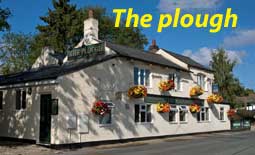
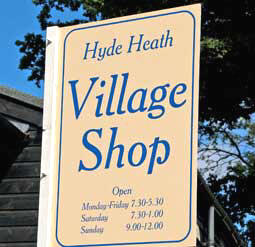
Sundays in Hyde Heath After the week's work the day of rest - for some. Hyde Heath has had a variety of places of worship. There was a chapel adjoining the entrance to Bullbaiters Lane, now a private bungalow called Shortmead. The one I attended was on the common, and that too is now a private house. The present chapel in Brays Lane was built in 1936. The Church of St Andrew's was already there before my own Hyde Heath days. It was then attached to the parish of St Mary's, Chesham; today it is part of the parish of Little Missenden. Nearly all the children attended Sunday School chapel in the morning and church in the afternoon. This wasn't so much for the good of our souls as to keep us out of mischief, for in those days some parents including mine had to work on Sundays. Prizes were given for good attendance rather than our knowledge of the Scriptures. My own parents were Catholics, but their relationship with that Church was not a happy one, so my sister and 1 were allowed to go to Sunday School with the others. Sometimes we were taken to evening service in the chapel. Old Mr Nash would stand erect giving the sermon. His loud voice and long white whiskers really put the fear of God into me. But then 1 was only little. Some Sunday evenings the Church held a Magic Lantern show with slides depicting scenes from the Scriptures. The present chapel is non-denominational. It has a fairly strong following, and Women's Own meetings are held there on Thursday afternoons. After Sunday School a good long walk was the rule. My father was free from his work in the afternoons, and took us for walks around the village. One of my favourites was through Brays Wood, down to Little Missenden and through the village, then back across the railway footbridge to Mantles Wood. It was especially beautiful in Spring. Brays Wood had a crab apple tree in one of its dells, and even in the 1950s 1 was still able to pick the fruit and make delicious jelly. Crab apples can still be found if you know where to look. Spring flowers grew abundantly then in the woods and hedgerows. Bluebells carpeted the ground and primroses flourished in the dells. Violets, including the elusive white variety with its lovely scent, could be discovered in the hedges of Keepers Lane and Chalk Lane. These flowers were picked to decorate many a kitchen windowsill, but the number taken was small compared to their profusion and no harm was done to their preservation: unlike present-day wholesale destruction of the hedges and the natural habitat of the flowers. Sunday cricket is normal in many villages today, but then it was unheard of. When Sunday afternoons were wet I don't know how other families passed the time. But our Sunday afternoons were always fully occupied one way or another. Sometimes my father would play the organ which fitted into the bay window of our house Glaslyn (now the Shambles). My mother had a lovely soprano voice, and sometimes our neighbour would bring his violin, so a pleasant afternoon concert resulted. But to go out to play on a Sunday? Never! One just did not do that. It was not regarded as respectable. Shops & Pubs Shops and pubs help to give character to any village. In Hyde Heath, pride of place goes to the Post Office, which is also the village store. Here, as in many villages, it is the centre of everything. Pub, church, chapel, village hall, garage and a second shop are all very close. In the 1930s, as now, the Post Office would be a stranger's first port of call. Enquiries would be readily answered, and he would go away with more information than he'd asked for. And get asked some questions too! The Post Office Stores today is a spacious and airy mini-market. In the old days it was much smaller inside, its entrance being a small door facing into Brays Lane. Small it may have been, but it seemed to stock and sell just about everything. A smell of paraffin told you it sold oil for the lamps of Hyde Heath, where electric light had just been heard of. No doubt the merchandise was kept in a very orderly fashion, and the Misses Murrell could find what you wanted right away, but to my childish eyes everything was jumbled together. In the summer Sophie Murrell made ice-cream out of frozen custard. It was kept in a galvanised container inside a wooden bucket, packed around with crushed ice. No refrigerators or freezers then! When we saw the ice wagon in the village we knew there would soon be ice~ cream for sale. It cost a halfpenny or a penny for a cornet and tuppence for a wafer. At the sweet counter you could almost buy the moon. We would settle for gob-stoppers, liquorice pipes, everlasting toffee sticks a foot long, or toffee lumps broken up by Miss Murrell's hammer. All good stuff guaranteed to rot your teeth! You might also buy a tuppenny, bag of marbles, a kite or a whip-and-top, but in that case you had to forfeit the sweets. A few yards down Brays lane on the opposite side were two other shops, adjoining. One was a grocery, run by Mr and Mrs Woods, the other a newsagent's run by Mr Coutts. Later, both shops were bought by Jean Draffan, who came here from Consett in County Durham during the slump of the 1930s. Jean continued with the grocery, using both shops for the business. Later, half of the premises was taken over by her sister Vera, who turned it into a wool and drapery store. Both sisters ran successful businesses there for many years, and have now retired to Scarborough. The drapery is now Leslie's Nurseries, and the grocery is a private house. Mr and Mrs Channer were our village butchers, supplying meat from an extension (now a garage) in Rock Rose, Brays Lane. later they took over the Post Office Stores, which they ran till shortly after the war. It has changed hands many times since, and was once the scene of a robbery. The village bread was baked by Mr and Mrs Craft, the bakery being at the side of Jean Draffan's grocery. During the summer the bakery door would be opened wide, and we would stand and watch the bread being kneaded, shaped, and put into the oven on long shovels. Bread was delivered at all sorts of times, thus earning the Crafts the name of Midnight Bakers. Their son Stuart became a pilot during the war and is now a flying instructor. We sometimes see him performing aerobatics over the village probably to let us know he is still around. Mr Charles Franklin was our coal merchant and delivered coal by horse and cart in Hyde Heath and neighbouring villages. His sons still carry on the business today. Charlie's mother kept the Red Cow public house, part of which still stands in the yard of Redlands next to the church. Altogether there have been four public houses in Hyde Heath. One was the Red Cow; one was the Eagle, now the site of Heath Motors; one, name unknown, was supposed have been in Browns Lane; and the last was the Plough. The Plough, the only one left, is still thriving and popular.
The Red Cow was not at all luxurious. It had a floor strewn with sawdust, a beer barrel sitting on the far end of a wooden table, a wooden bench to sit on, and a spittoon in a corner to catch the expectorations of the tobacco-chewing patrons. Yes, they really did chew tobacco then, as in Western movies. That's how I saw the Red Cow when poking my nose around the door one summer evening. Very daring, because children weren't allowed on the premises. The Plough had a public bar, a small saloon bar, and a tiny off-sales bar separating the two. It also had a piano. Darts, dominoes and draughts were played in the public bar. The hoi polloi there had no contact with the so-called elite in the saloon, who tippled shorts instead of Benskins Bitter. The Plough has just been given a new lease of life, and could become a popular venue under the management of John and Sally Malyon. Milk was the other staple drink. It was supplied by local farmers straight from the cow, nothing added or taken away. The cows had been TT-tested, so it was supposed to be safe to drink. Anyway, it did us no harm. Old Will Howell, whose smallholding was in Brays Green Lane, delivered milk by pushing a handcart laden with two full milk churns from which hung galvanised pint and halfpint measures. He would ring a handbell and we would take out our jugs to be filled. He gave up this round when the opposition became too strong for him to make a reasonable profit. Apart from the village shops, we had the choice of groceries delivered by the Co-op van every two weeks. And a horse-drawn covered cart came from Chesham full of ironmongery, buckets, brooms, mops, and anything else needed for cleaning in the home. There was a big increase in sales of Lysol and Jeyes Fluid when there was a scare like diphtheria. One village girl, my best friend, contracted this disease. I was not allowed near her home for ages, and when I was allowed in, I had to pass through a doorway draped with sheets soaked in disinfectant. Getting around - buses & bikes Although pre-war Hyde Heath was a long time ago, no, we didn't travel on penny-farthing bicycles ! But nearly everyone had a bike of some kind. It was a necessity for getting to and from work outside the village. My first bike was a Hercules costing £I2, which was a lot of money then. There was a bus service, but the buses never seemed to run at a convenient time for workers. Do they ever? Like many others, I cycled to work in Amersham. Bikes took us everywhere at no cost. I have even cycled to Marlow, Slough and Windsor. At one time there was no bus service to Amersham at all. If you didn't cycle, you walked. There was quite a lot of walking done - and not for pleasure, as it is today! I heard of one farm worker, in the haymaking season, setting off in the early hours and tramping crosscountry to reach Stokenchurch by 7 am. If you owned a car you were a cut above the rest. In I928, Hyde Heath probably had less than five cars, other than those used by local tradesmen. In the I930s more people bought cars, which made the roads more hazardous for us cyclists but nothing like they are today. The bus service to Chesham was far better than the one today. The school bus left Hyde Heath at 8.40 am for those who went to Whitehill Girls' and Germain Street Boys' schools. To and from school we paid no fares. Other buses ran at roughly two-hour intervals, taking the Fullers Hill route to Chesham, adult return fare to Chesham Broadway seven old pence. Friday was Market Day in Chesham. The 3.45 pm bus from the Broadway would be chock-a-block with kids and Mums and their shopping. We kids were often turned off the bus at the bottom of Fullers Hill because of overloading. It would then chug up the hill loaded with Mums and shopping and wait for us at the top. The driver usually gave us five minutes to catch up. If we dawdled he would go off without us, leaving us ,to walk the rest of the way home. If you stayed behind at school for choir or sports practice then you jolly well had to walk, rain or shine. Can you imagine that happening to the kids of today? For moving things around other than bodies, nearly everyone had a wheelbarrow, handcart or old pram. On these, we shifted anything from manure to furniture. Although one or two tradespeople had a car or van, most deliveries to the village, especially to shops and farms, were made by horse and cart. Coal came this way, so did milk, and even ice-blocks for Miss Murrell's home-made ice-cream. Hay wains were used at haymaking time. Hay was cut in the smaller fields by men with scythes and piled onto the wain. It was a lovely feeling to be hoisted up to sit on top of the hay for the ride home. The smell of the new-mown hay was unforgettable. These days the smell is probably quite different because of the sprays and other chemicals used. Horses and carts had their own by-product. When they had gone by, there would be a stampede to see who could get there first with bucket and shovel. If you won often enough your family had the best roses in the Produce Show. For more ambitious travel there were charabanc outings to the seaside, open-topped at that. These days most families have their own transport and can go where they like.
Pre-War social life The other day I heard someone call Hyde Heath a dull village. But surely it's what you make it? Personally, I had a whale of a time, as did many others. Things probably weren't to everyone's liking, but it depended on how hard you were to please. Social evenings were held once a week in the Hall, costing adults 6d and children 3d. (These are "old pence" in case you've forgotten). This included refreshments, which were laid on by members of the Women's Institute. Mrs Flint played the piano. She and her husband later formed the Hyde Heathens Dance Band. There were games and raffles. Anyone was welcome to get up and do a "turn", and it didn't matter whether you had talent or not. It was more a question of nerve. Mrs Hobbs used to sing "When The Angels Play Their Harps For Me", Harold Shirley would play a tune on his onestring fiddle, and my mother would sing "Danny Boy" and reduce everybody to tears. Afterwards we played Musical Chairs and Pass the Parcel. Then Connie Flint would play a waltz like "The Blue Danube", and everybody would get up and dance. That's how I learned to dance. During the war I moved on to the Jitterbug.... The Hyde Heathens consisted of Connie on piano, husband Tom on drums, Henry on violin, Maurice on banjo, and last but not least Jack Redding from Chesham on trumpet. Not at all a bad combination. Dances were held once a month, and everyone seemed able to dance. The women wore long dresses and the men their best suits. Most girls wore home-made dresses reaching not quite to the floor. We must have looked a right old lot of hillbillies. There were other functions attended by the so-called gentry, who were obliged to wear full evening dress. Not having the required attire, we didn't go to these. I was about fourteen then, and if there was no dance at Hyde Heath a crowd of us would cycle to Ballinger with our long dresses pinned up to the waist to save catching in the bicycle chain. I was dance-mad, and if there were not enough boys to go round, girls would partner one another. Once a year a travelling theatre came to the village, the actors taking lodgings with the local people. Twice weekly a different play was put on. "Sweeney Todd" was a big draw, as was "East Lynne". They would ask a local girl or boy to take part, thus guaranteeing a good audience. I remember one girl playing Little Willie in "East Lynne" who was supposed to be ill and dying. She was plump and robust, but she really did do a good job of dying. A concert party sponsored by the newly-formed Chesham Co-operative Society came to the hall twice a year. They called themselves the Fol-de-Rols. We children endured two hours of songs, sketches and jokes, just to get free samples at the door, usually sauce or tea. I tried the dodge of going round twice, and was told to ask my mother to join the Co-op. Eventually she did. The Co-op van delivered groceries here on Fridays. All purchases were tied up with string around brown paper parcels. My mother always kept the string and brown paper, which would one day "come in useful", she would say. An outing to the seaside was usually organised by Mrs Hampton, President and Founder of the local branch of the Women's Institute. The open-topped charabanc would draw up outside the Memorial Hall at 4 am, and mums and kids would pile into it for the long trip to the seaside. Destination was usually Bognor Regis. It was Mr Hampton who donated the hall to the village as a memorial to the fallen of the I9I4-I9I8 war. So it is properly called the Memorial Hall. Back in I928 there were only a few village members of the Women's Institute. I was told that they sat around the coke stove knitting socks and so on. It wasn't all jam and Jerusalem even in those days. In I938 a sports club was formed. My friends and I were in our teens, so it was probably one bright idea aimed at keeping us on the straight and narrow. The yearly fee was half-a-crown, and sixpence was payable on attendance to subsidise the evening snacks and drinks. There were dart games (for a small trophy), pocket billiards, card games, shove-ha'penny and table tennis. I was "shooter" of the ladies' netball team, and we played teams from other villages. The netball posts were stored under the stage in the hall. They have since vanished. So has the electric hedge-cutter purchased for the use of members. All gone to No-Man'sLand. Alas, wartime brought the end of the sports club. Whist drives were held fortnightly, alternating with other villages. Little Missenden still run theirs to this day. Many a partner's master card has been trumped in error. Then there was cricket. The teams played on a pitch that didn't resemble in any way the almost plasticsmooth pitch of today. Matches were played in Howell's field lying beyond the common towards Hawthorn Farm. Never on Sundays - that would have been sacrilege. After completing our Saturday morning chores a gang of us would wander towards the meadow, hearing the sound of leather on wood echoing through the copse. "Cor, that was a sixer!" we would shout, and hurry along to see the play. The outer field was bordered by a wood on one side and a hedgerow on the other. Beyond the hedgerow lay the cornfield. Wild bee-orchids grew in profusion in the outer field. We would pick them by the dozen, discarding those that drooped before we got home. No one ever imagined that these beautiful wild orchids would become so rare as to be classified as a protected species. There was a small hut where the cricket score was kept by Margaret Darvell and another young lady. To qualify for this role you had to have been a Grammar School pupil. That ruled me out. Anyway, I was too small. It was at the cricket matches that I learned that "Wal clart olt on Arfer!" meant "Well caught hold of, Arthur!" And other Bucks expressions and swear words unfamiliar in our household. Cricket teas were served by the players' wives, with Mrs Howell the farmer's wife presiding. Fresh cream from the farm went into the huge scones, and cucumber sandwiches and cream cakes were the order of the day. I learned the dodge of standing around looking soulful and longing at the table laden with goodies, and someone would soon hand me a cream cake. That someone was usually Mrs Alfred Howell herself. "Run along now", she would say, and I would sit beneath the horse chestnut tree licking out the cream. Happy days! After the war, the cricket field was no longer used for the game. Most of the land had been given over to arable farming to feed us in wartime. Cricket was later played for a while in the field which now contains the Chiltern Hundreds Housing Association estate. Later still, everything to do with cricket seemed to fall apart for years. But somehow it revived, and now we have a thriving cricket club with a fine pitch and a smart pavilion on the common. Produce Show & Fair Days The Produce Show usually took place in June or July. 1 don't know when the first-ever show was held. A huge marquee would be erected on the common to house the exhibits. I use the word "common" instead of "heath", because that is what my generation called it. Entrants competed for the Hampton Trophy and the Brodie Rowe Cup, the latter being given by a stockbroker who then lived at Hyde House. In later years Dr Sybil Welsh of the Wick also contributed a cup. Dr Welsh was my mother's employer, so it was considered infra dig for my mother to enter-the competitions. But enter she did, and won several prizes over the years until an almighty row blew up over this. She was an excellent cook, but unfortunately her culinary talent did not rub off on this particular offspring. Great rivalry abounded among the fruit and vegetable entrants. The main section was for the cottage gardeners. Weeks beforehand, neighbours were spying on each other to wheedle out the secrets of what vegetables were being grown and what they were treated with. Old Mr Turney got away with loads of prizes. He lived in a cottage in Brays Lane, one of a row of four where the only sanitation was bucket lavatories. We can only guess at his cultivation secrets. On the big day, competitors bustled and pushed to get their vegetables into the best display position to catch the judges' eyes. Embroidery was my mother's speciality and over the years she won many prizes. Others who had their heydays of winning prizes were the Turney, Darvell, Edwards, Fountain, Atkins and Stacey families. I was made to enter the children's wild flower display contest. Once 1 just shoved them into a jar, and blow me if I didn't win a prize. Outside, the travelling show people erected a roundabout, all brass and painted horses such as you find at the steam fairs today. There were swinging boats and coconut shies too, and penny water squirts to annoy the adults. These people were eventually barred from the common, as their attractions were too popular and took money from the villagers that otherwise would have been spent on the side shows organised by the village hall committee. There was also bowling for a pig, a real live one at that. Other attractions were hitting the flitch, pillow fights on the greasy pole, knobbly knee contests, and races for adults and children. The real highlight was the Gurning, where one tried to pull the ugliest face through a horse collar. No one ever beat Jack Fountain at this. Out would come his false teeth and he would swallow his nose with his bottom lip. Real 'orrible, he looked. Somehow, the Produce Show eventually petered out, and is now no more. Guy Fawkes Night Bonfire night was one of the big events of the year. One year in the early 1930s we had all hands on deck to build the biggest bonfire ever. The news spread to London, and the Evening News sent a reporter and photographer to get the story. Which they duly did, and the Hyde Heath bonfire rated photographs in a London paper! You'll have to take my word for this, as 1 do not have a copy nor do I know anyone who has. The bonfire was sited on the common directly opposite the Plough. This didn't please landlord Frank Morton, for he had two petrol pumps right next to the pub. But eventually he relented, and donated a barrel of tar and a pile of old tyres for the bonfire. My blood runs cold when I tbink of the trees and furze bushes that were cut down to feed that fire. There. was no thought of ecology and preservation in those days The bonfire was built so high that a cherry-picking ladder was needed to reach the top. One local resident had her birthday on November 5th, and her father could always be relied on to provide a good display of fireworks. What a night that was! There were no mishaps, and the bonfire burned and smouldered for more than a week. The Chesham Fire Brigade made an appearance just in case the petrol pumps blew. These days such a bonfire would never even be allowed. We kids searched the common next day for lost and dropped coins, and we found some. I found a silver tanner (six old pence), and for the next week I had more friends than I ever knew of.
Coronation Day 1937 The Memorial Hall committee had a jolly good pow-wow to sort out how to celebrate the Coronation of King George VI and Queen Elizabeth. Plans were made for a fancy dress parade, and prizes were to be awarded for the best fancy dress, the best-dressed vehicle including bicycles, and the best-decorated house. The proc ession was to start at the top of Keepers Lane and end at the Post Office, and Robert Redding would lead it on foot. It seemed the whole village turned out. There were prams, bicycles and carts as well as people. My mother had been widowed almost a year, and she was told off severely by two very religious ladies for dressing up so soon after my father's death. "He's not even cold in his grave", they said.
There were two Britannias. I was one of them, and was mounted on a horse-drawn cart with other children each representing one of the Dominions of which Great Britain was the mother country. Myself as Britannia was my mother's brainchild, and she borrowed a fireman's brass helmet for me to wear. 1 felt so embarrassed that 1 wasn't really a happy exhibit at all. One rather large lady dressed up and intended to ride a donkey the whole way. But such was her weight that the poor beast could hardly move, so she had to get off and walk part of the way. Everybody was happy. Children were presented with Coronation mugs. If you were lucky you got a china mug, if unlucky an aluminium one which when filled with hot tea burned your hands and left a black ring around your mouth. Somebody's bright idea, no doubt. It seemed that prizes were won by all. My mother got a First for Best Decorated Bungalow, Dominions Cart, and one for fancy dress. A film of the Hyde Heath Coronation Celebrations was taken by Sir Frank Morgan, and many of you have probably seen it. Everybody turned out for events like this. There was no television for a counter -at traction! And now the wheel seems to be turning full circle as television palls and people again get interested in village life. Afterwards, four wooden seats were bought to commemorate the Coronation. One was sited in Brays Green Lane, one at the back of the common, one near Bullbaiters Lane facing the common, and one - the only one still remaining - near Nash's Farm.
Hyde Heath in Wartime Neville Chamberlain stood on the runway waving a piece of paper, his agreement with Adolf Hitler for "Peace In Our Time". People believed it then, so we got a shock when war with Germany was declared the following year, in September 1939. Our village was never to be the same again. Our tribal headman, obeying government instructions, began to estimate our resources. The Memorial Hall was to become a temporary HQ for civilian administration, the distribution of gas masks, and later, ration books. Everybody thought the war would be over within six months. It was to be six years. Careers were interrupted, mine included. Conscription was started with the 18-year-olds, and as the war progressed took in men up to 40 years old. Every young man here seemed to be in uniform. Some of the girls joined up too, and others like myself were drafted into local factories, most of which were turned over to making machines for the war. No one could refuse work when directed, on penalty of internment. Conscientious objectors on religious grounds were interned for the duration and put to work on the roads, thus keeping open the lines of communication. Hyde Heath had its own Dad's Army. Men joined the Local Defence Volunteers, as they were called before becoming the Home Guard. Yes, they did drill on the common, armed with broomsticks, and a funny sight it was too. After a lot of mickey-taking real arms were eventually issued. Farm workers, food distributors, and the physically unfit were classed as being in reserved occupations. Flat feet got you out of the infantry. But if you wore glasses for weak eyesight you were put into the Observer Corps. Or so it was said. When we had all been fitted into our various slots the big upheaval began. Trees were felled in Pipers Wood and other woodland in the Amersham area. Huts were erected to accommodate His Majesty's Armed Forces. At various times, Pipers Wood housed the Royal Bucks & Oxon Regiment, the King's Own Scottish Borderers, and the famous Highland Division. A WVS canteen was opened in the Hall for those off duty. Some of my evenings were spent serving tea and refreshments there. I also did canteen work at the Free Church canteen in what was St Michaels Hall at Sycamore Corner in Amersham. (Now the site of the Amersham Free Church). I met my soldier husband there, and he would escort me home to Hyde Heath after evening canteen duty. The village was overwhelmed with soldiers, but one could still safely cycle or walk to and from Hyde Heath without being molested. There would be a few wolf whistles, but these 1 found rather flattering. The Plough became another place of entertainment. Many an evening 1 would help Frank Morton pull the pints, especially when he had an attack of gout. Sometimes 1 would play the piano for a sing-song, not too expertly I fear, and would be relieved to find that some soldier could play much better. The village had a permanent searchlight post situated in Bullbaiters lane. The occupants were more or less adopted by the villages. My mother would billet their wives for a weekend, and I remained in contact with some of the wives for years afterwards. Hyde House was used as a temporary rest home for Sir Archibald MacIndoe's "Guinea Pigs". These were badly burned aircrew needing plastic surgery, and they came here between operations. Frank Morton advised me not to go to the Plough some evenings because some of these men were "not a pretty sight". 1 went all the same and was not bothered by what I saw. My sister Grace (who died recently) eventually joined the Women's Land Army, but at this time was an ARP volunteer. She was on duty the night a string of bombs were jettisoned onto the village, believed to be from a German plane aiming to destroy the searchlight post. This was our first experience of bombing. None of the houses took a direct hit, but the explosions blew out many doors and windows. Rumour said that six bombs were dropped but only five exploded. Despite a search the sixth was never found. Rumour again said it fell in Mantles Wood. Nobody was injured but we were all scared out of our wits. It made us realise what the people of London went through night after night in the blitz. Dances were held regularly in the hall and in the sergeants' mess at the camp. The 51st Highlanders would entertain us with pipes and drums, and they nearly went through the floor when they performed the Sword Dance and the Highland Fling. They really were a wild bunch. Apart from all this entertainment, villagers were busy helping the war effort in many ways. The WI set up a jam-making unit in the kitchen of the hall. Some people say that it was the spoilt jam going down the drains that eventually blocked them, but, being wartime, it could have been other things. Home canning took place at the Wick (now Cedar Ridge). Here Dr Sybil Welsh set up the canning unit, and the whole thing was operated by my mother, with WI members helping during the busy fruit seasons. Most of the fruit for jam and canning was grown locally. The gardener and I picked plums from the Wick orchard until we were sick of the sight of them. Queen Elizabeth now the Queen Mother visited Hyde Heath and other nearby villages in 1940, to see what was being produced on the Home front by the Wl. All the villagers turned out for her visit. It was a lovely day as the schoolchildren lined up to see her proceed down Brays Lane to the Wick. The village's Red Cross contingent were presented to Her Majesty. One of them, Mrs Frances Clark, still lives in Hyde Heath. Lady Denman, head of the Bucks Federation of Women's Institutes at the time, and Dr Welsh, took Her Majesty to see where the canning was done. My mother felt it a great honour to demonstrate and explain the process. 1 still have Press photographs and cuttings from the Bucks Examiner, which 1 am treasuring to hand down to my grandchildren. Her Majesty also went into the Hall to see the jam being made, and perhaps someone in the WI has a record of this. In the months leading up to D-Day, Pipers Wood camp was full of Americans. Again the villagers made them welcome. I corresponded with the wife of one of the lads, in Newhaven Connecticut, and she sent me some nylons. They were the first pair I ever wore. I took them to show the girls at work and was the envy of all. 1 dared not actually wear them to work then, but of course they got worn eventually and I cried my eyes out when at last they wore out. 1 found the Americans very polite, and none of them put a foot wrong. One of our girls went to America as a G1 bride, and came back to see us some years ago. After the Americans left, the camp was used for the rehabilitation of our returning prisoners of war. The WVS sewed flashes to their new uniforms and made what alterations were necessary so that they would look smart when returning to their regiments. I helped with this work, as 1 had certain sewing abilities. It was during this time that the "Stars In Battledress" show was put on at the camp. The WVS and their helpers including myself were invited. The stars I remember best were Max Bygraves and Terry-Thomas. Almost everything was rationed. But in Hyde Heath we did pretty well. My mother got on well with the army cooks. She met them when working in the hall canteen, and she billeted service wives for weekends. So somehow we never seemed to go really short of food. I did miss sweets and chocolate though, and 1 would swap my cigarette coupons for sweet coupons with the fellows at work. Nowadays, dieting, 1 am right off sweets! During the lunch hour some of us would cycle to the British Restaurant in White Lion Road, Amersham, now the Amersham Common Village Hall. For fourpence 1 could get a fairly good meal. There was Walton Pie, which seemed to have everything chucked into it, cheese flan, or scrambled dried egg on toast. It all went down well. The tea ration was eked out by adding a pinch of bicarbonate of soda to the pot, thus making the tea stronger. In many ways the war did the village some good. People here became more open-minded. After all, there was a world outside Hyde Heath! Travel became easier as the bus service improved (it's now reverted to almost nothing) and more people got cars. And we still had our bikes. I am pleased to see that the new homes around the Candlestick are now well established, and that our new friends are becoming integrated into the village community. These days I am content to sit back and watch the world go by, having done my turn on various committees in the past, and having taken part in many post-war activities including being a member of the village choir. This is a personal record, about Hyde Heath as 1 have known it, mainly up to the war years but with an occasional glance at those since for comparison. No doubt there is much more to be written by other people and from other angles. If and when it comes to be written, I shall be very interested to read it. Ten years have passed since writing "Hyde Heath - Our Village". Ruth Coulton said to me 'When will you write Book Two?". This was some time ago and now, with the Millennium approaching and with me getting older, I think the time has come to try again to hold your interest, hopefully I'll will be able to do so, beginning with: POST WAR HOUSING The Army Camp was vacated as soon as possible after the war.
The prefabricated huts were now being taken over by "Squatters" - that is people
who found there were no homes to come back to. The local council of the time refurbished the interiors and
exteriors making the huts more suitable to live in. Reg, myself, and baby (Tony)
were on the point of moving into Pipers Wood as "squatters". We had married in
1945 and lived with my with mother - not an easy time for any of us. So we were
happy to hear of new homes to be built here in Hyde Heath by the Amersham
District Council of the time. At last "‘omes for eroes", a place of one's own. Four 3 bedroom houses, one 2 bedroom house and 2 huts were to
be built facing the allotments in what is now Brays Green Lane. There were a few young married couples who, having been born
in the village, qualified for a council house. Private homes to let were
unobtainable, a few were for sale, which none could really afford even at prices
which these days look quite ridiculous - £250 up to £1,000 and a little more. The allocation of the new homes was eagerly awaited. Reg and
I were "over the moon", we had been allocated No. 3 Brays Meadow - the small two
bedroom house. Our hopes were dashed when we were "downgraded" to occupy
the ground floor flat - No. 5. Later I found out from the Housing Officer the
reason why. They should not have listened to "Porky Pies" - then later when all
came to light Reg and I were offered one of the first 2 bedroom houses to be
built in Meadow Way. In 1948 the Amersham District Council kept their word and
here I am in No. 13 to this day. This is I hope not going to turn out to be an autobiography,
I will save that for another time - if ever. I can tell you that the new homes were extremely well built,
except for the flats which were not sound proof - and are the same to this day.
The interiors were quite luxurious compared to other cheaper rented houses. Hot
water on tap, then later gas cookers and boilers installed. Altogether there are 60 homes in Brays Green Lane, Brays
Meadow, Saunders End and Meadow Way, many of which are privately owned through
the "Right to Buy Ad". Mine is still rented so if there are any window and
kitchen sales people reading this - please don't phone! A few garages were built at the end of Brays Meadow. No one
could foresee that nearly every householder has a car these days. I have a
memory of one villager (rather autocratic) remarking that council house tenants
have no right to own a television or a car. She would turn in her grave these
days. Once the council house estate was established, 1977 saw land
developers looking at Hyde Heath as a very desirable place to build new private
homes. The large cherry tree orchard off Keepers Lane was eventually sold to a
company of developers, the owners of the orchard "doing very nicely thank you".
Prior to the sale, some villagers formed what was and still is the Village
Society". Their aim is to keep our village as rural as possible, which they do
well. A letter from the then Chairman was circulated among some of the
villagers, if not all, calling a meeting in the Village Hall and saying that a
protest had been lodged on "my" behalf to the Planning Committee against the
building of the homes in the "Cherry Orchard". Well, although I appreciated
their efforts, nobody protests on my behalf without my say so ! The meeting was quite well attended. I doubt whether the following was ever recorded in the minutes of the meeting. The Chairman stood to open the meeting. "Ladies and Gentlemen..." that was as far as he got. Yours truly, 'upped on 'er feet (size 4s) "Mr Chairman, who gave you permission to protest on my behalf ? I certainly didn't." Then I sat down - a few "hear-hears" from the back of the hall.. Poor chap, 'urnmed and aahed'. Up I stood again. "As a matter
of fact, I am all for the building of more homes". Well, you see the outcome,
the evidence is there Walnut Way, Westfield, Stonecroft, good houses, well
established with pleasing to look at gardens. Yet, sadly, in spite of the build
up and hoped for support of village shops, we are now reduced to one post office
village store and one public house. Many of our "newcomers" have begun where the older villagers left off. Many have been co-opted on to the Village Hall Management Committee and very hard they work. They also have their critics, there is always someone who could do better. To those who criticise I say 'Well have a go yourself". That is why an Annual General Meeting is called, "put up or shut up". If I have a offended anyone by these remarks, tough! I'm not in the running for a popularity award !
Top of Page
Home
Well, would you believe it, when the village population was
much smaller in the 1930's, public transport was very efficient. Buses ran
regularly every day except Sundays. From 7am in the mornings (the worker's bus),
then roughly every two hours until 8pm in the evenings. Not one ran empty. The Village Fete, held yearly, is well publicised and well supported by villagers and people from the surrounding area. David Coulton and his team of volunteers work terribly hard to make a success of the day. Sadly they still have their critics. Times change, new ideas are welcome. Every year David appeals for help, I'm amazed by how much is raised for the upkeep of the village hall by such a few hard workers who care. The vintage car show this year (1999) drew the interest of many. Although the fete was held early this year the weather was kind. The cricket club kindly loan the pavilion for serving afternoon teas. Ladies of the WI working hard to keep the cups that cheer flowing. By the way if you would like an update of the cricket team fixtures, read Sylvia Brown's "Village Voice" column in the Amersharn Advertiser. I enjoy watching the team play but never know when they are "at home". 1955/56 saw the beginnings of the "Village Choir", a motley lot of would be opera singers (some could, some just croaked) when our organiser and conductor Lady Shelley (resident of Brays Close) finished with us, we sounded great, even the "croakers" managed to be tuneful and the "screechers" learn to moderate their tone. Licked into shape we entered the local choir festival held in Amersham, not doing too badly. Sir James Shelley looked after the dramatic side of the presentation of "Carmen" (extracts from). From small beginnings the choir, about 20 ladies and gentlemen, managed to perform quite well. Concerts were held in the village hall. Some older villagers may remember these. Mrs Parry our pianist was most patient (my piano tuner who came this year told me that Mrs Parry was his grandmother, it's a small world). Anyway, Handel's Messiah was performed, also Bartok's work, difficult, Alfred Noyes "Highwayman", also madrigals, also difficult. We had great times rehearsing. These were the days before television and videos. Very few people owned a television set during the fifties. I very rarely hear people singing these days, or a paper boy, postman or milkman whistling. Hyde Heath has a very good Drama Group. I am not sure of the formation date, some of the founder members would be able to tell you. I never seem to be able to catch up with what they are up to. Anyway they are a good group of thespians doing their utmost to give value for money. I am not a drama critic so enjoy all that is on show, without bias. As with the running of the Village Hall, they appeal for new blood and would, I am sure, welcome anyone with "stars in their eyes". Now, The Old Tyme Music Hall, wonderful once a year entertainment! Villagers have asked me "How do I get tickets for the Old Tyme Music Hall?". How? Don't ask me! Is it a "closed shop"? Although run mostly by villagers, how does one get a ticket? And why only two nights in the year? I'm only asking what has been asked of me. If any of you hard working entertainers of the Old Tyme Musical Hall can answer this, I am sure Sylvia will be happy to use the information in her Village Voice column, that is if you happen to be reading this. By the way, one ticket please for me for next year's Old Tyme Music Hall ! Every village has its characters and I have known many. The one who stays with me is Mrs Tui (pronounced "chewy") Addison. Recently I was asked "Who was Tui ? Her name is over the kitchen door of the Hall." Tui Addison lived with her husband George and three children in the house called "Doon" situated in Weedon Hill. She was, as I remember, WI President and a member of the local Tory party, organising fund raising events for the latter. You needn't have gone to Alton Towers for a white knuckle ride, a lift in Tui's car was the forerunner, especially if you were given a lift at night. Tui's other form of transport was her "sit up and beg" bicycle with its wobbly unstable wicker basket tied to the handlebars more often than not loaded with goodies for some needy poor old soul. Sundays would see Tui cycling to the little church at the Lee, up the long mile" right in the middle of the road! Never mind what was coming! When organising the Conservative Ball held in the Hall, it was always monkey suits and the evening gowns for the ladies. I was pressed ganged with others into helping with the refreshments. Poor George was told to dance with all the ladies in turn, he was a reluctant Lionel Blair, anyway he daren't argue with Tui. There was a heart of the gold beneath her stern exterior, if help was needed Tui came forward. She made many friends and a few enemies. In her will, she provided money for a new kitchen to be built in the Hall, the old one was awful. Since Tui's kitchen was "built" I understand further improvements have been made. Those who knew Tui, I am sure will all have their own particular memories, all good ones I hope. Now, I must mention dear old Vi (Violet Beardmore). Some of you have their own opinions of Vi, to me she was a good friend and Agony Aunt, a neighbour of many years. She was a no nonsense person, calling a spade a spade, also ungodly. When I said to her that by her deeds she was a Christian she nearly hit the roof! Vi was always busy baking bread and cakes, her Chelsea buns to coin a phrase, went down like hot cakes. During the time I worked in the Village shop Vi would bring her batches of home-made goodies for us to sell. She made very little profit. Vi knew all the remedies for all ailments, I'm sure "kill or cure" was her motto. I was the recipient of her views on politics, religion and any other subject, she was anti-everything with a terrific sense of humour. I never cared whatever others thought or said of her, neither did she. She had a hard life and cared for her elderly, deaf husband to the end. She was a great help to me when I had difficulties with my elderly, infirm mother. I will never forget Vi as long as I live. Neither will those who knew her. Who, among our villagers can forget Bill Heaney, our "Roadman" ? Bill was a Burma war veteran who was not able to forget his experiences in the jungle, often drowning his sorrows in drink. This is not meant to be unkind to his memory for Bill was kind to children and animals, especially dogs. He was a dog sitter for many. Bill was employed by the Rural District Council as our Roadman, a nicer title would be Lane Keeper. With his brush, a shovel and barrow at the ready our lanes would be cleared of all rubbish. Verges well-trimmed, weeds in the gutters rooted out. He would have a fit were he alive today to see some of the mess our lanes are in - paper, ice-cream wrappings, cans, bottles and dog mess to boot, I should say "on boots". We badly need another Bill here in Hyde Heath. I remember once I cleared the gutter outside my home only to be told by a neighbour (now deceased) that I was mad and it was the Council's job, what a sad attitude ! As we approach the Millennium hopefully the celebrations planned will make it memorable. To many it will mark the entry of just another year, and to some it will be remembered as a celebration of 2,000 years of Christianity. Whatever your beliefs enjoy the festivities. Hyde Heath must never be allowed to become a dormitory village. Please care about it and the beautiful surrounding countryside. Use the facilities as often as possible, help where and when possible and keep Hyde Heath with a lived-in look. I have some good kind neighbours and have many friends who supported me when I hit the bad patch and still help me when necessary in so many ways. Thank you all from the bottom of my heart. Hopefully your interest has been held without boring the pants off you. Surely you didn't expect me to emulate the "Tropics of Ruislip" I'm no Leslie Thomas and I still have to live here you know! My thanks to all those friends I have spoken to about this book, especially Arthur and Frank Atkins and to my late husband for editing and producing the first edition. My special thanks to Ruth and David Coulton who said there should be a follow up from 1989. Also to Sylvia Brown, Ken and Shirley Vaughan, Rodney and Jayne Howlett and to John Darvell for the photographs. Irma Dolphin August 1999
|
|